
Chimney sweeping and cleaning in Lakewood.
A sweep brushes the coating of soot and creosote from the flue and the shelf above the damper, then empties the firebox and any stove pipe. Call us, or leave a request on the form at whatever hour is convenient.
- Based in LakewoodJefferson County, Colorado
- We call you backTo agree on a day
- Book onlineAny hour
Photo: Hayden Park on Green Mtn 2017-09-30 1622, Chris Light, CC BY-SA 4.0
A sweep, step by step.
What leaves the flue, how often it needs to, and what to settle before the first fire of the season.
What leaves the flue.
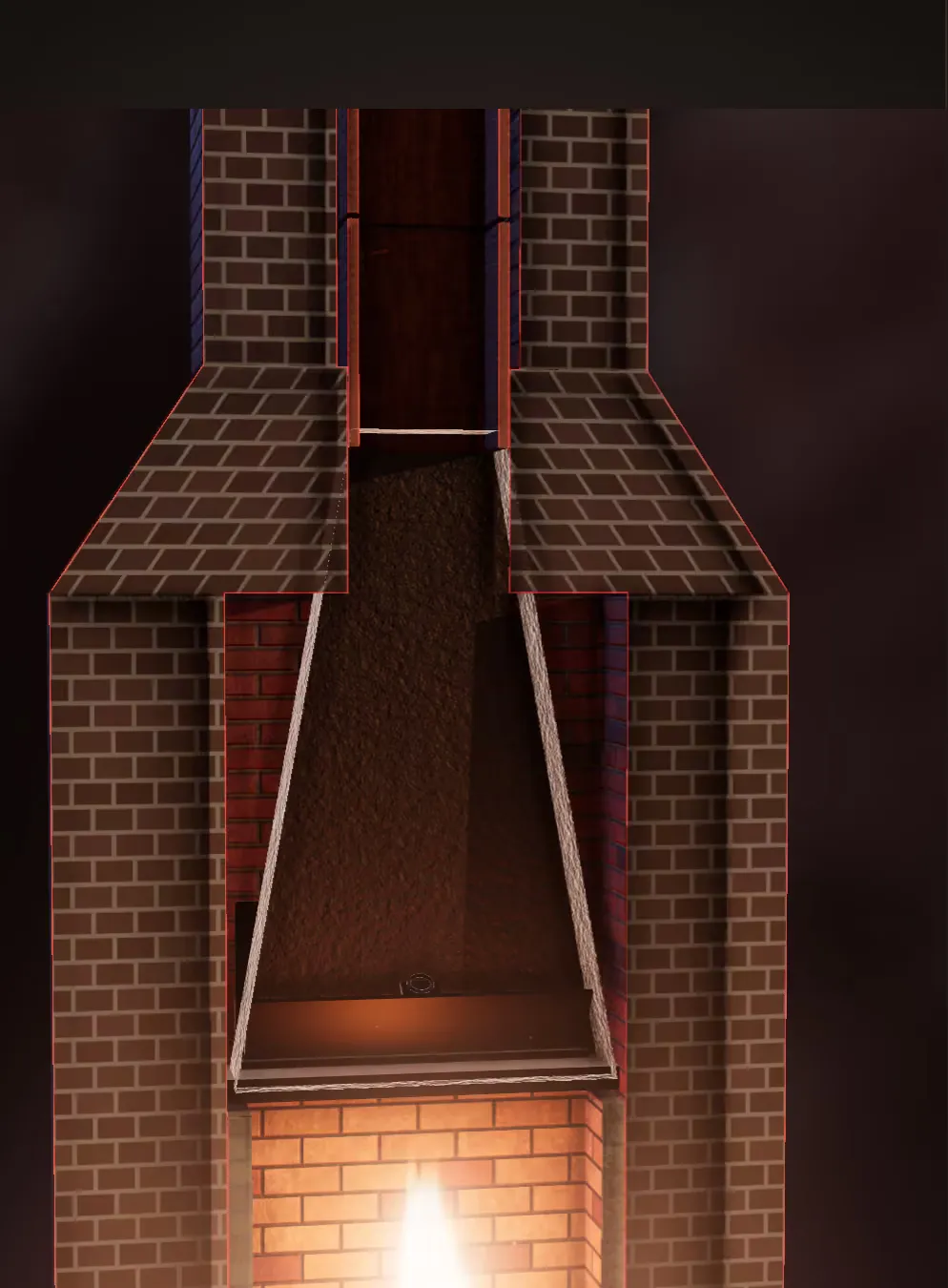
A burning fire coats the inside of the flue with a thin film. When new it is dry and sweeps off easily. After many slow, smoldering fires it thickens into sticky tar, and eventually into a hard glaze that resists even a stiff brush.
Work starts at the damper and moves up toward the cap, then turns to the smoke shelf, and ends on the firebox floor. All that comes loose is gathered up and hauled away, so nothing stays behind to burn later.
Illustration What a clean flue gives you.
A chimney fire begins when built-up creosote ignites inside the flue. Remove the deposit, and an errant spark has far less to feed on.
Draw gets better too. Smoke leaves through the top, whereas a coated flue can let it roll back into the room once the damper is opened.
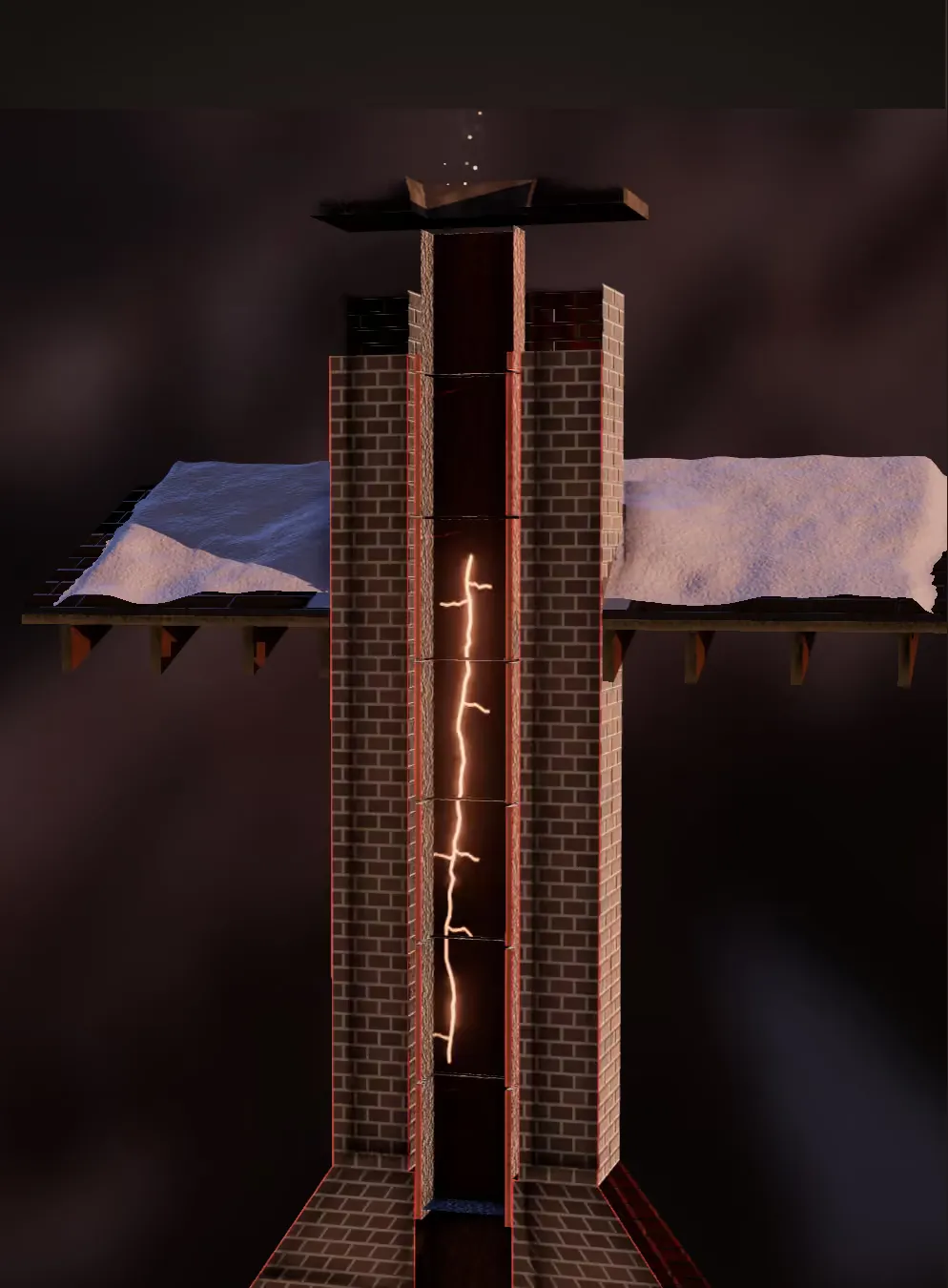
Illustration Right at the top.
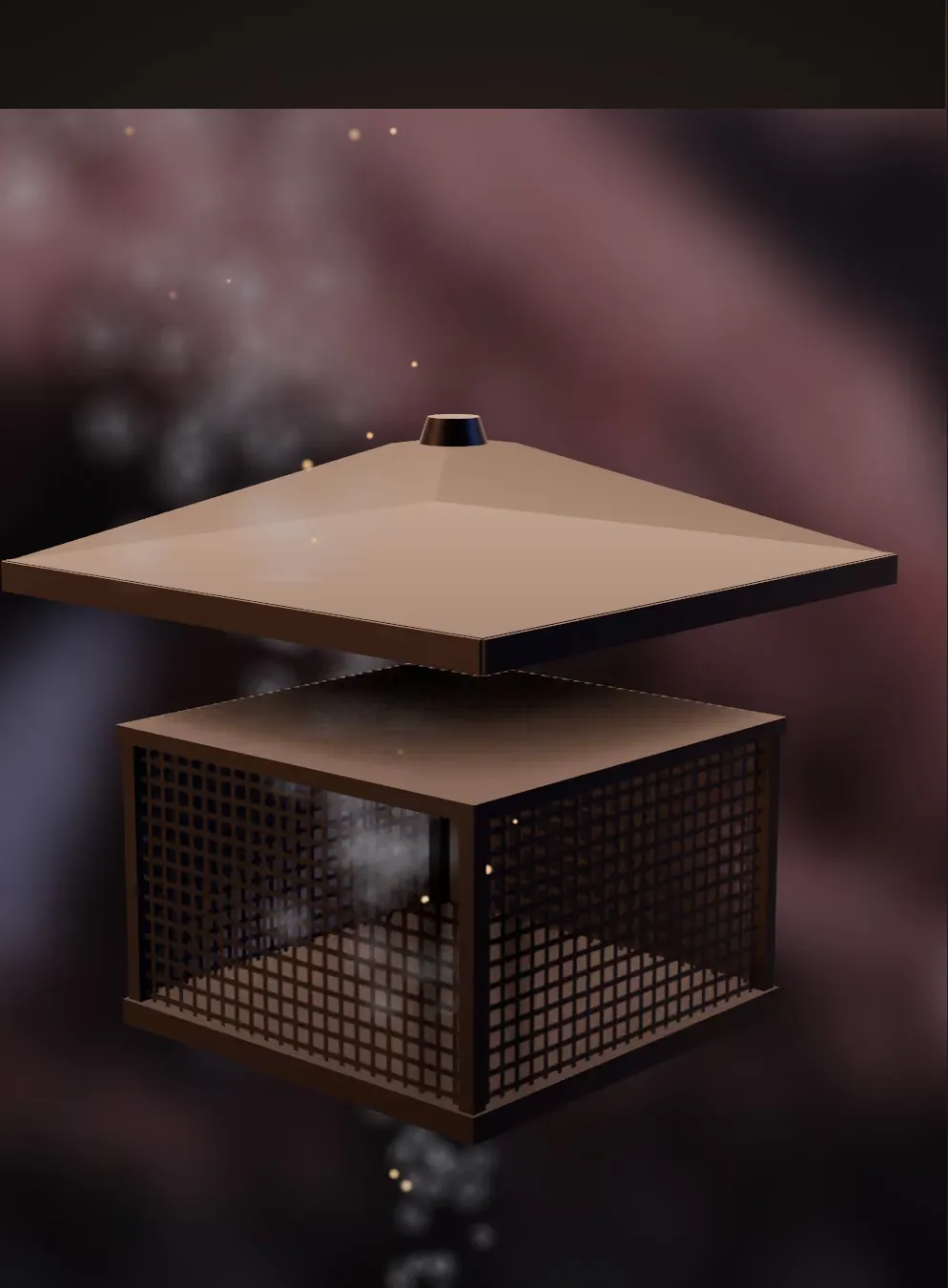
Smoke arrives at the cap already cooled, and cooled smoke drops soot. A clogged screen weakens the draw, yet the same screen stops embers, so it is cleaned each time we visit.
Illustration
Questions about sweeping.
Short answers, each naming a source where there is one.
How do I know a sweep is due?
The amount of deposit matters more than the date. NFPA 211 recommends a yearly inspection, which reveals how much has built up and what kind it is. Glossy or tar-like coatings call for action soon.
Which do I need, a sweep or an inspection?
Deposits come out with a sweep. An inspection evaluates the whole chimney, top to bottom, against the three levels NFPA 211 describes. Because soot can hide damage, a single visit frequently covers both.
What is glazed creosote?
It is creosote baked into a hard, shiny, tar-like skin, typical where smoke cools slowly, such as a stove damped for the night. A brush hardly shifts it, so seeing it is a cue to book soon.
Does a gas fireplace need sweeping?
Gas burns without creosote, but its vent has to stay clear. Nests, leaves or flakes from a worn liner can block it, so it pays to have the vent looked at now and then.
Why does the smell get stronger in warm weather?
Warm, humid air brings out the creosote odor, and a downdraft can push it indoors. When the deposit is gone, so is the cause.
How do I arrange a sweep?
Phone (983) 955-9455 or use the form below, which takes requests at any hour. Someone calls back to fix a day.
Tell us about your chimney.
Say what you have noticed on the form, or pick up the phone. Someone gets back to you to choose a day.
- 1You get in touch Phone the office, or write a few lines on the form.
- 2Someone calls you back We talk and find a day that works for you.
- 3The visit, top to bottom The work follows the stack from the roofline down to the hearth.
- 4Your decision Afterward we explain what we saw. What happens next is up to you.
By form
Any hour of the day or night
Photo: Country School and yard, Lakewood Heritage Center, Xnatedawgx, CC BY-SA 4.0